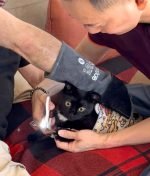
Tips on Trimming Your Cat’s Nails
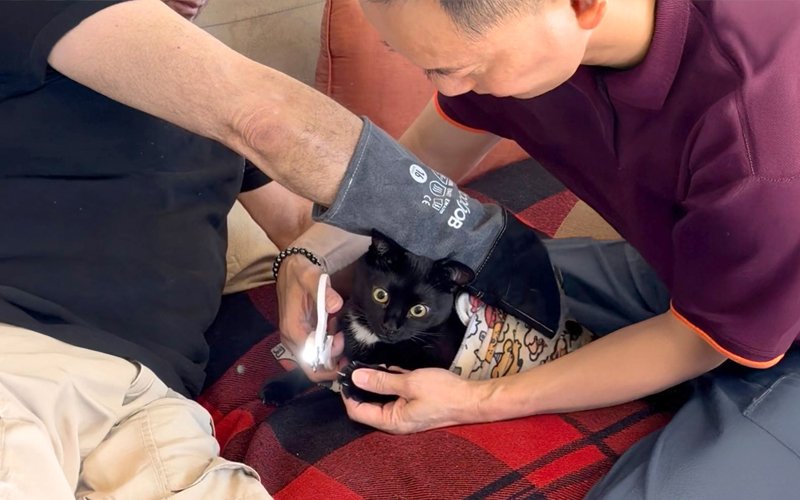
Why trim your cat’s nails?
Beyond the obvious damage to furniture and the pain it can inflict on your body, there are other sound reasons to cut your cat’s nails regularly. Here are some helpful tips on trimming your cat’s nails.
If your cat’s claws grow too long can curl around and dig directly into their paw pads, causing severe pain, inflammation, and infection. Overgrown nails can also catch in carpets or other padded surfaces, causing broken nails, injured toes, and stress or panic. Finally the extra claw (dewclaw) on the front legs doesn’t wear down as fast as the others and may curl into the leg if not trimmed.
1. The “Grudge” Myth & Cat Temperments
The biggest barrier for owners is their own anxiety—the fear of hurting the cat or ruining their bond. While a cat might grumble or vanish under a bed for an hour afterward, they don’t hold grudges. Once treats are delivered and routines resume, they move on.
Second, reactions vary dramatically:
- The Snoozer: Will nap in your lap through the entire trim.
- The Grumbler: Squirmy and vocal, but manageable with patience.
- The Panic Reactor: Convinced their life is in danger, fighting with a flurry of claws and teeth.
Recognizing your cat’s category sets realistic expectations. Panic isn’t “bad behavior”—it’s pure fear.
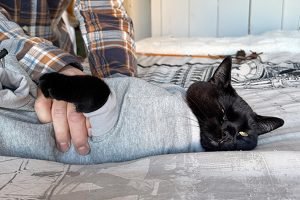
Luchia, wrapped
2. Tools of the Trade
Skip human clippers. Use scissor-style cat clippers with curved blade notches that cradle the nail without crushing it.
- Curved Scissor Clippers: They cut cleanly without crushing the nail.
- Dual-Lighting Trick: The pink “quick” inside the claw carries nerves and blood vessels. Clippers with built-in LEDs help, but placing a light underneath the paw backlights the keratin, showing the quick’s boundary clearly.
- Safety & Calming Prep: Keep styptic powder open nearby. If using a pheromone calming spray, mist your towel 15 minutes beforehand (wall diffusers don’t work fast enough for handling stress).
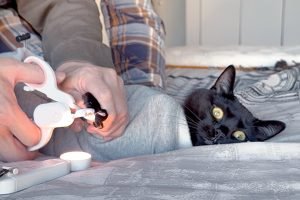
Cutting Luchia’s Nails
3. Pre-flight and Restraints
- Calming Support: For terrified cats, ask your vet about mild sedatives like gabapentin, given 1.5 to 2 hours beforehand to keep stress levels manageable.
- Isolate First: Guide your cat into a closed bathroom before bringing out tools to avoid a chase under beds. If using a carrier, top-loading models are best so you can unclip the lid without pulling them through a door.
- Hammock vs. Towel Burrito: Grooming hammocks are awesome for calm cats—once the collar and back are secured, suspended cats feel less direct restraint. But for flailing cats, threading limbs through leg holes is dangerous; stick to a snug towel burrito, sliding out only one paw at a time.
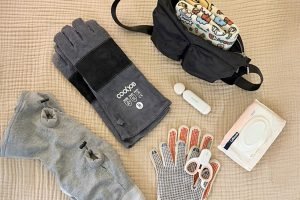
Gloves, restraints, clippers, lights, wipes
4. Proper Cutting Techniques
Press the toe pad gently between your thumb and forefinger to extend the claw. Locate the pink quick with your top-and-bottom lighting.
- Avoid Superficial Trims: Shaving off a microscopic sliver leaves the hook sharp and requires another trim days later. Cut roughly 2 millimeters ahead of the quick. Avoid cutting into the quick at all costs, as it will result in pain and bleeding.
- Cut Vertically: Position clippers top-to-bottom, never side-to-side, to avoid splintering the nail layers.
- Don’t Forget the Dewclaws: Remember the inner “thumb” claws on the front paws. Because they don’t touch the ground, they are the most prone to curling inward and puncturing the pad.
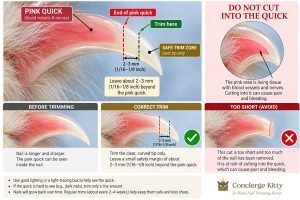
Chart showing best practices and cutting area
5. When to Call in the Pros
Trimming is healthcare, not an all-or-nothing test. Clipping just two claws in a calm session is a massive win.
If you can trim at home, fantastic! But if your cat enters panic mode, you don’t have to wrestle with them alone: our concierge team can step in by providing a specialist to assist you with gentle restraint, or sending a two-person team to handle the entire trim safely in your home.
Why cut your cat’s nails?
Beyond the obvious damage to furniture and the pain it can inflict on your body, there are other sound reasons to cut your cat’s nails regularly. Here are some helpful tips on trimming your cat’s nails.
If your cat’s claws grow too long can curl around and dig directly into their paw pads, causing severe pain, inflammation, and infection.Overgrown nails can also catch in carpets or other padded surfaces, causing broken nails, injured toes, and stress or panic. Finally the extra claw (dewclaw) on the front legs doesn’t wear down as fast as the others and may curl into the leg if not trimmed.
1. The “Grudge” Myth & Cat Temperments
The biggest barrier for owners is their own anxiety—the fear of hurting the cat or ruining their bond. While a cat might grumble or vanish under a bed for an hour afterward, they don’t hold grudges. Once treats are delivered and routines resume, they move on.
Second, reactions vary dramatically:
- The Snoozer: Will nap in your lap through the entire trim.
- The Grumbler: Squirmy and vocal, but manageable with patience.
- The Panic Reactor: Convinced their life is in danger, fighting with a flurry of claws and teeth.
Recognizing your cat’s category sets realistic expectations. Panic isn’t “bad behavior”—it’s pure fear.
Luchia, wrapped
2. Tools of the Trade
Skip human clippers. Use scissor-style cat clippers with curved blade notches that cradle the nail without crushing it.
- Curved Scissor Clippers: They cut cleanly without crushing the nail.
- Dual-Lighting Trick: The pink “quick” inside the claw carries nerves and blood vessels. Clippers with built-in LEDs help, but placing a light underneath the paw backlights the keratin, showing the quick’s boundary clearly.
- Safety & Calming Prep: Keep styptic powder open nearby. If using a pheromone calming spray, mist your towel 15 minutes beforehand (wall diffusers don’t work fast enough for handling stress).
Cutting Luchia’s Nails
3. Pre-flight and Restraints
- Calming Support: For terrified cats, ask your vet about mild sedatives like gabapentin, given 1.5 to 2 hours beforehand to keep stress levels manageable.
- Isolate First: Guide your cat into a closed bathroom before bringing out tools to avoid a chase under beds. If using a carrier, top-loading models are best so you can unclip the lid without pulling them through a door.
- Hammock vs. Towel Burrito: Grooming hammocks are awesome for calm cats—once the collar and back are secured, suspended cats feel less direct restraint. But for flailing cats, threading limbs through leg holes is dangerous; stick to a snug towel burrito, sliding out only one paw at a time.
Gloves, restraints, clippers, lights, wipes
4. Proper Cutting Techniques
Press the toe pad gently between your thumb and forefinger to extend the claw. Locate the pink quick with your top-and-bottom lighting.
- Avoid Superficial Trims: Shaving off a microscopic sliver leaves the hook sharp and requires another trim days later. Cut roughly 2 millimeters ahead of the quick. Avoid cutting into the quick at all costs, as it will result in pain and bleeding.
- Cut Vertically: Position clippers top-to-bottom, never side-to-side, to avoid splintering the nail layers.
- Don’t Forget the Dewclaws: Remember the inner “thumb” claws on the front paws. Because they don’t touch the ground, they are the most prone to curling inward and puncturing the pad.
Chart showing best practices and cutting area
5. When to Call in the Pros
Trimming is healthcare, not an all-or-nothing test. Clipping just two claws in a calm session is a massive win.
If you can trim at home, fantastic! But if your cat enters panic mode, you don’t have to wrestle with them alone: our concierge team can step in by providing a specialist to assist you with gentle restraint, or sending a two-person team to handle the entire trim safely in your home.